Linux serial driver foundations
Compare SPI and UART and see where their driver interfaces fit in Linux.
See the detailed course outline Training & Capability DevelopmentLearn. Practise. Apply.⌕
Explain the Linux SPI and UART subsystems.
Develop Linux drivers for SPI and UART devices. Work with kernel interfaces and Device Tree, then investigate common communication problems.
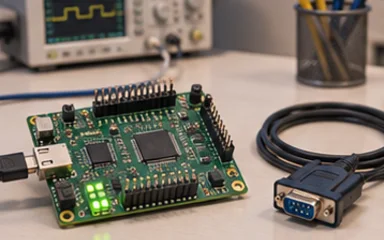
Compare SPI and UART and see where their driver interfaces fit in Linux.
See the detailed course outlineUse the kernel SPI subsystem and hardware descriptions to integrate an SPI peripheral.
See the detailed course outlineWork with UART driver concepts and investigate common serial communication problems.
See the detailed course outlineReview Linux driver types, kernel modules and the architecture relevant to device support. Introduce SPI and UART communication, including master and slave interaction, timing, baud rate and flow control. Prepare the compiler, kernel sources and cross compilation environment before examining Device Tree hardware descriptions. The day connects protocol behaviour with the build and platform setup required for the SPI and UART implementations that follow.
Develop an SPI device driver and describe the device in Device Tree, examining controller and device structures in the subsystem. Implement read and write transfers and consider modes and timing requirements. The outlined labs exercise SPI communication and test the driver with hardware. Use spidev, kernel logs and tracing to investigate failures, connecting bus behaviour with the kernel interfaces used by the driver.
Review the Linux UART subsystem, TTY layer and registration flow before implementing a driver and its Device Tree configuration. Configure baud rate and parity, handle data and interrupts, and examine transmission behaviour. Practical activities test and debug UART communication using the terminal tools and kernel diagnostics named in the outline. The emphasis is on relating configuration and handler behaviour to the data observed through the interface.
Need the detailed syllabus? Request the course outline.
Check prerequisites and confirm the course fit with Timmins for your role, experience and selected delivery.
Check the course outline for the software, development environment and any target hardware. Confirm installation steps, versions, equipment access and lab arrangements before joining.
Ask which preparation materials, follow-up resources or trainer support are included in your selected delivery.
Confirm the certificate, completion requirements and any assessed activities for your selected batch. A practical project does not by itself establish an assessed skills award.
Understand certificates and assessments →Confirm dates, venue, fees, available seats and delivery arrangements with Timmins before booking.
Ask Timmins about upcoming dates for this course.
View the public training calendar →Ask about another date or team delivery. Share your preferred timeframe, city or delivery mode and participant numbers. Timmins will discuss the options; dates, trainer availability, delivery and fees must be confirmed separately. Sending an enquiry does not reserve a place or confirm a class.
Your selected course is included in the draft. Review it and press Send in your messaging app.
Embedded Linux developers integrating peripherals over SPI or UART.
Basic understanding of C programming. Familiarity with Linux command-line tools. Prior knowledge of Linux kernel internals and device drivers (recommended).
Check the outline and confirm the software environment, hardware, equipment access and setup requirements for your selected delivery. Do not assume all courses use the same board or lab environment.
The course topics describe the technical scope. Ask Timmins to confirm the labs, demonstrations and any assessed activities for your selected programme. Completion and assessed credentials have different requirements.
Discuss an in-house session with Timmins. Share the team’s roles, systems and intended outcomes so the scope, prerequisites, delivery and any adaptations can be agreed.