Java language and Android development foundations
Set up a Java development environment and understand where Java fits into Android development.
Explore the course learning plan Training & Capability DevelopmentLearn. Practise. Apply.⌕
Develop the ability to read, write and debug Java code.
This course focuses on Java Programming and its usage for the development of Android applications.
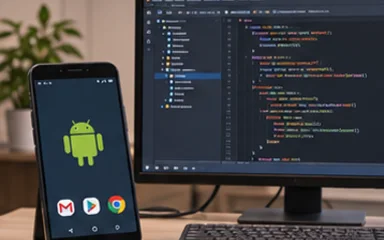
Set up a Java development environment and understand where Java fits into Android development.
Explore the course learning planBuild on the language foundations with classes, fields, methods and constructors.
Explore the course learning planUse Java I/O to work with files and compare byte, character and filtered streams.
Explore the course learning planSet up a Java development environment and understand where Java fits into Android development. Work through classes and files, naming conventions, primitive types, arrays and strings. Then use operators, branches and loops to express decisions and repeated actions in a Java program. Connect the foundational ideas to the examples in the section, distinguishing the responsibility of each component before considering how they work together in a system.
Build on the language foundations with classes, fields, methods and constructors. Compare static and instance behaviour and see how Java handles objects in memory. Study inheritance, abstract classes and interfaces, including what object equality means and how programming to an interface helps limit coupling. Relate the component structure and interactions to the task a user needs to complete, tracing how input and state affect what the application displays.
Use exceptions to handle errors and compare ways of propagating them through a program. Explore how lists, sets, maps and iterators represent and process groups of objects. The section also introduces Java threads and how multiple threads change the way a program runs. Connect the Android components to the application behaviour they support, following how information moves between the interface, application logic and platform services.
Use Java I/O to work with files and compare byte, character and filtered streams. Examine patterns such as Builder, Factory, Strategy and Adapter, including where similar designs appear in Android. Finish by reviewing library and build topics and how they fit into a Java application. Connect the Android components to the application behaviour they support, following how information moves between the interface, application logic and platform services.
The published outline groups these topics by module, session or combined days. The sections cover the 5 days programme; confirm the final day-by-day timetable with Timmins.
Need the detailed syllabus? Request the course outline.
Check the course fit for your role and experience. Confirm the prerequisites, delivery scope and preparation before booking.
Check the full outline for this course’s tools and technologies. Confirm software versions, licences, accounts, equipment, access and installation requirements before joining.
Ask which preparation materials, follow-up resources or trainer support are included in your selected delivery.
Confirm the certificate, completion requirements and any assessed activities for your selected batch. A practical project does not by itself establish an assessed skills award.
Understand certificates and assessments →Confirm dates, venue, fees, available seats and delivery arrangements with Timmins before booking.
Ask Timmins about upcoming dates for this course.
View the public training calendar →Ask about another date or team delivery. Share your preferred timeframe, city or delivery mode and participant numbers. Timmins will discuss the options; dates, trainer availability, delivery and fees must be confirmed separately. Sending an enquiry does not reserve a place or confirm a class.
Your selected course is included in the draft. Review it and press Send in your messaging app.
Share your role, experience and intended workplace application with Timmins to confirm whether this course is suitable.
Programming Knowledge and experience in any structural language like C. Good to have OO knowledge in a language like C++, C# etc.
Check the full outline for this course’s tools and technologies. Confirm software versions, licences, accounts, equipment, access and installation requirements before joining.
The learning plan describes the course topics and activities in the published summary. Ask Timmins to confirm the exercises, trainer feedback and any assessed activities for your selected delivery. Completion and assessed credentials have different requirements.
AI-assisted activities are not listed in this course summary. Ask Timmins to confirm the scope of your selected delivery rather than assuming AI tools are included.
Discuss an in-house programme with Timmins. Share the team’s roles, starting knowledge and workplace challenges. Agree any adaptations, assessment and follow-up support in the proposal.