Boot chain and image components
Trace the path from power-on to the root filesystem and identify what the bootloader and kernel each do.
See the detailed course outline Training & Capability DevelopmentLearn. Practise. Apply.⌕
Trace boot from power-on to the root filesystem.
Build and boot an embedded Linux system, then diagnose and recover it when startup fails. Work through U-Boot, the kernel and a minimal root filesystem.
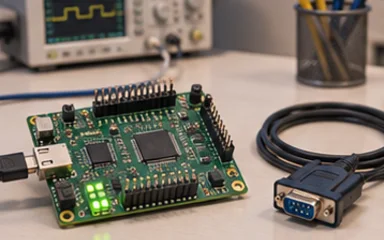
Trace the path from power-on to the root filesystem and identify what the bootloader and kernel each do.
See the detailed course outlineWork with bootloader settings and kernel arguments to understand how they affect target startup.
See the detailed course outlineBuild a minimal root filesystem and use startup evidence to diagnose and recover a system that fails to boot.
See the detailed course outlineTrace startup from power on to a Linux prompt on BeagleBone Black and boot the board using prepared images. Examine U-Boot environment variables, partitioning and root filesystem placement before investigating boot failures. Recovery exercises use the serial interface, alternative boot arguments and a backup partition. The day establishes how to identify the failing boot stage and regain control of a system that will not start normally.
Review multistage bootloader designs and extend U-Boot with a custom command. Move into Linux kernel responsibilities, boot parameters and configuration before building a basic working kernel. The outlined exercises include diagnosing startup failures and adding board specific features. Participants connect the bootloader’s handover with kernel configuration so they can reason about which component must change when the target platform behaves differently from expected.
Examine the contents of a minimal root filesystem and use BusyBox to build one, including an init script. Explore how the kernel starts with an initramfs and how NFS parameters support a network mounted root filesystem. Practical work configures the relevant kernel support and boot arguments. The day connects filesystem construction with alternative startup arrangements useful when developing, testing or recovering an embedded Linux system.
Need the detailed syllabus? Request the course outline.
Check prerequisites and confirm the course fit with Timmins for your role, experience and selected delivery.
Check the course outline for the software, development environment and any target hardware. Confirm installation steps, versions, equipment access and lab arrangements before joining.
Ask which preparation materials, follow-up resources or trainer support are included in your selected delivery.
Confirm the certificate, completion requirements and any assessed activities for your selected batch. A practical project does not by itself establish an assessed skills award.
Understand certificates and assessments →Confirm dates, venue, fees, available seats and delivery arrangements with Timmins before booking.
Ask Timmins about upcoming dates for this course.
View the public training calendar →Ask about another date or team delivery. Share your preferred timeframe, city or delivery mode and participant numbers. Timmins will discuss the options; dates, trainer availability, delivery and fees must be confirmed separately. Sending an enquiry does not reserve a place or confirm a class.
Your selected course is included in the draft. Review it and press Send in your messaging app.
Embedded Linux, firmware and BSP engineers working on board bring-up or boot recovery.
C programming and comfort working in a Linux environment.
Check the outline and confirm the software environment, hardware, equipment access and setup requirements for your selected delivery. Do not assume all courses use the same board or lab environment.
The course topics describe the technical scope. Ask Timmins to confirm the labs, demonstrations and any assessed activities for your selected programme. Completion and assessed credentials have different requirements.
Discuss an in-house session with Timmins. Share the team’s roles, systems and intended outcomes so the scope, prerequisites, delivery and any adaptations can be agreed.