Cross-compilation and target setup
Configure a kernel build for the target hardware and cross-compile a Linux image.
See the detailed course outline Training & Capability DevelopmentLearn. Practise. Apply.⌕
Configure a kernel build for target hardware.
Cross-compile and bring up Linux for an embedded target. Work with the bootloader, kernel, drivers and Device Tree as part of the porting process.
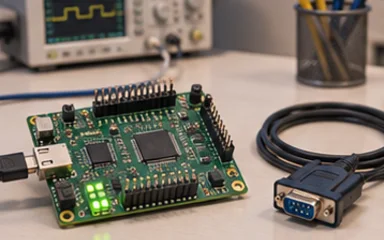
Configure a kernel build for the target hardware and cross-compile a Linux image.
See the detailed course outlineAdapt U-Boot settings and Device Tree entries to bring up the target board.
See the detailed course outlineMake board-specific driver changes and investigate kernel and performance issues on the target.
See the detailed course outlineReview embedded Linux architectures and prepare a cross compilation environment for the selected platform. Examine bootloader responsibilities and configure, customise and cross compile U-Boot. Continue into kernel configuration, modules and Device Tree before building and deploying the kernel on the target. The outlined labs connect host tools, hardware selection and startup components, giving participants a basis for understanding the changes required during porting.
Modify an existing driver for custom hardware and examine Device Tree binding and hardware abstraction. Use the debugging approaches named in the outline to investigate driver issues and a kernel crash on the target. Review kernel size, performance, boot time and power considerations before the final porting project. The day connects practical adaptation with the diagnostic and optimisation work needed to make a platform usable.
Need the detailed syllabus? Request the course outline.
Check prerequisites and confirm the course fit with Timmins for your role, experience and selected delivery.
Check the course outline for the software, development environment and any target hardware. Confirm installation steps, versions, equipment access and lab arrangements before joining.
Ask which preparation materials, follow-up resources or trainer support are included in your selected delivery.
Confirm the certificate, completion requirements and any assessed activities for your selected batch. A practical project does not by itself establish an assessed skills award.
Understand certificates and assessments →Confirm dates, venue, fees, available seats and delivery arrangements with Timmins before booking.
Ask Timmins about upcoming dates for this course.
View the public training calendar →Ask about another date or team delivery. Share your preferred timeframe, city or delivery mode and participant numbers. Timmins will discuss the options; dates, trainer availability, delivery and fees must be confirmed separately. Sending an enquiry does not reserve a place or confirm a class.
Your selected course is included in the draft. Review it and press Send in your messaging app.
Firmware and embedded Linux engineers adapting Linux to a new hardware platform.
Basic understanding of Linux and embedded systems. Familiarity with C programming and Linux command line. Knowledge of hardware architecture and microcontrollers/microprocessors.
Check the outline and confirm the software environment, hardware, equipment access and setup requirements for your selected delivery. Do not assume all courses use the same board or lab environment.
The course topics describe the technical scope. Ask Timmins to confirm the labs, demonstrations and any assessed activities for your selected programme. Completion and assessed credentials have different requirements.
Discuss an in-house session with Timmins. Share the team’s roles, systems and intended outcomes so the scope, prerequisites, delivery and any adaptations can be agreed.