Kernel architecture and modules
Distinguish kernel space from user space and build and load a basic Linux kernel module.
See the detailed course outline Training & Capability DevelopmentLearn. Practise. Apply.⌕
Explain the roles of kernel space and user space.
Develop and debug Linux kernel modules and basic drivers. Explore how kernel code interfaces with embedded hardware and user-space programs.
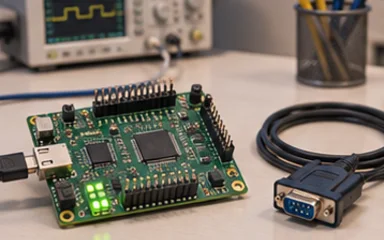
Distinguish kernel space from user space and build and load a basic Linux kernel module.
See the detailed course outlineExamine how a driver interacts with embedded hardware and provides an interface for a user-space program.
See the detailed course outlineReview interrupt handling and synchronisation, and use kernel debugging techniques to examine what the driver is doing.
See the detailed course outlineReview Linux kernel architecture and the distinction between kernel and user space. Prepare the embedded development environment, including cross compilation and kernel configuration, then write, compile, load and unload a simple module. Examine kernel logs and the basic data structures and memory allocation used in kernel programming. The sessions establish the build and diagnostic workflow needed before developing device drivers on target hardware.
Develop and register device drivers while examining hardware registers and memory mapping. Explore interrupt handling, deferred work and synchronisation through the primitives named in the outline. Introduce debugging and profiling tools, including KGDB, ftrace and perf, then consider interfaces between kernel components and user space. Practical examples connect driver behaviour with GPIO, I2C or SPI interactions and the evidence needed when a kernel component fails.
Need the detailed syllabus? Request the course outline.
Check prerequisites and confirm the course fit with Timmins for your role, experience and selected delivery.
Check the course outline for the software, development environment and any target hardware. Confirm installation steps, versions, equipment access and lab arrangements before joining.
Ask which preparation materials, follow-up resources or trainer support are included in your selected delivery.
Confirm the certificate, completion requirements and any assessed activities for your selected batch. A practical project does not by itself establish an assessed skills award.
Understand certificates and assessments →Confirm dates, venue, fees, available seats and delivery arrangements with Timmins before booking.
Ask Timmins about upcoming dates for this course.
View the public training calendar →Ask about another date or team delivery. Share your preferred timeframe, city or delivery mode and participant numbers. Timmins will discuss the options; dates, trainer availability, delivery and fees must be confirmed separately. Sending an enquiry does not reserve a place or confirm a class.
Your selected course is included in the draft. Review it and press Send in your messaging app.
Embedded software developers moving into Linux kernel and device driver work.
Basic knowledge of Linux operating system. Experience in C programming. Familiarity with embedded systems development and tools.
Check the outline and confirm the software environment, hardware, equipment access and setup requirements for your selected delivery. Do not assume all courses use the same board or lab environment.
The course topics describe the technical scope. Ask Timmins to confirm the labs, demonstrations and any assessed activities for your selected programme. Completion and assessed credentials have different requirements.
Discuss an in-house session with Timmins. Share the team’s roles, systems and intended outcomes so the scope, prerequisites, delivery and any adaptations can be agreed.