Linux, Containers and Resource Isolation
Explore Containers as isolated Linux processes, Container resource behaviour, and Host versus container visibility.
Explore the course learning plan Training & Capability DevelopmentLearn. Practise. Apply.⌕
Diagnose CPU, memory and I/O constraints affecting containers.
Containerised applications introduce multiple layers between the application and the underlying Linux system.
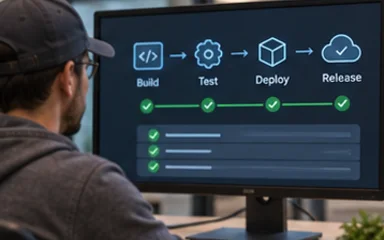
Explore Containers as isolated Linux processes, Container resource behaviour, and Host versus container visibility.
Explore the course learning planExplore Kubernetes performance architecture, pods, nodes and workloads, and Kubernetes networking and storage.
Explore the course learning planExplore Prometheus and Grafana for Investigation, OpenTelemetry and distributed context, and Identifying downstream latency.
Explore the course learning planExplore Containers as isolated Linux processes, Container resource behaviour, and Host versus container visibility. The discussion covers Investigating container performance, Container OOM events, and Container incident methodology. The section also examines Container architecture. Follow the relationship between configuration and execution, identifying which component runs the workload and which dependencies must be available for it to operate.
Explore Kubernetes performance architecture, pods, nodes and workloads, and Kubernetes networking and storage. The discussion covers Workload investigation, Pod status, and node-Level investigation. The section also examines CPU pressure. Relate observations to the original symptom or performance goal, and distinguish evidence about system behaviour from assumptions about its cause. Explain how these topics fit together and which assumptions need to be made explicit when applying them in a workplace setting.
Explore Prometheus and Grafana for Investigation, OpenTelemetry and distributed context, and Identifying downstream latency. The discussion covers cloud-Native capstone investigation, Observability signals, and Kubernetes events. The section also examines Throttling metrics. Connect the tools and configuration to the operational task, following how the workflow is executed and what evidence helps explain its result or failure.
Need the detailed syllabus? Request the course outline.
Check the course fit for your role and experience. Confirm the prerequisites, delivery scope and preparation before booking.
Check the full outline for this course’s tools and technologies. Confirm software versions, licences, accounts, equipment, access and installation requirements before joining.
Ask which preparation materials, follow-up resources or trainer support are included in your selected delivery.
Confirm the certificate, completion requirements and any assessed activities for your selected batch. A practical project does not by itself establish an assessed skills award.
Understand certificates and assessments →Confirm dates, venue, fees, available seats and delivery arrangements with Timmins before booking.
Ask Timmins about upcoming dates for this course.
View the public training calendar →Ask about another date or team delivery. Share your preferred timeframe, city or delivery mode and participant numbers. Timmins will discuss the options; dates, trainer availability, delivery and fees must be confirmed separately. Sending an enquiry does not reserve a place or confirm a class.
Your selected course is included in the draft. Review it and press Send in your messaging app.
Site Reliability Engineers, Platform Engineers, and DevOps Engineers.
Working knowledge of Linux. Basic understanding of containers. Familiarity with Kubernetes pods, deployments and services.
Check the full outline for this course’s tools and technologies. Confirm software versions, licences, accounts, equipment, access and installation requirements before joining.
The learning plan describes the course topics and activities in the published summary. Ask Timmins to confirm the exercises, trainer feedback and any assessed activities for your selected delivery. Completion and assessed credentials have different requirements.
AI-assisted activities are not listed in this course summary. Ask Timmins to confirm the scope of your selected delivery rather than assuming AI tools are included.
Discuss an in-house programme with Timmins. Share the team’s roles, starting knowledge and workplace challenges. Agree any adaptations, assessment and follow-up support in the proposal.