Managing Docker Images
Explore Managing Docker images, Docker, and Managing Docker containers.
Explore the course learning plan Training & Capability DevelopmentLearn. Practise. Apply.⌕
Manage Docker images and containers, including creation, manipulation, and inspection.
Participants will start with Docker basics, exploring its architecture, installation, and essential commands for managing images and containers.
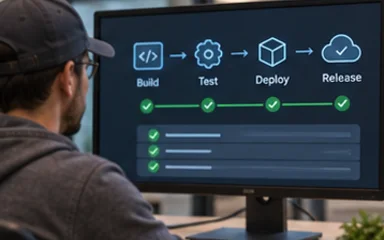
Explore Managing Docker images, Docker, and Managing Docker containers.
Explore the course learning planExplore Master node to worker node interactions, Installing a single node K8s Cluster with Minikube, and Finding IP Address of a Pod.
Explore the course learning planExplore types of cloud computing services, Infrastructure as a Service ( IaaS ), and Shared responsibility model.
Explore the course learning planExplore Managing Docker images, Docker, and Managing Docker containers. The discussion covers Installing Docker in windows, Launching Docker container in background mode, and Kubernetes basics. Follow the relationship between configuration and execution, identifying which component runs the workload and which dependencies must be available for it to operate. Explain how these topics fit together and which assumptions need to be made explicit when applying them in a workplace setting.
Explore Master node to worker node interactions, Installing a single node K8s Cluster with Minikube, and Finding IP Address of a Pod. The discussion covers Kubernetes introduction, Kubernetes architecture, and Kubernetes objects. Follow the relationship between configuration and execution, identifying which component runs the workload and which dependencies must be available for it to operate.
Explore creating your first deployment in imperative style, creating and updating an application deployment in declarative style, and Packaging your applications as helm charts. The discussion covers creating and updating a ReplicaSet in declarative style, creating and updating a Pod in declarative style, and Helm overview. Follow the relationship between configuration and execution, identifying which component runs the workload and which dependencies must be available for it to operate.
Explore types of cloud computing services, Infrastructure as a Service ( IaaS ), and Shared responsibility model. Participants also create Virtual Machine. The section also examines Benefits of using cloud services and Azure subscriptions. Trace how the language construct affects execution and data handling, relating the example to code that another developer can read, reason about and maintain.
Need the detailed syllabus? Request the course outline.
Check the course fit for your role and experience. Confirm the prerequisites, delivery scope and preparation before booking.
Check the full outline for this course’s tools and technologies. Confirm software versions, licences, accounts, equipment, access and installation requirements before joining.
Ask which preparation materials, follow-up resources or trainer support are included in your selected delivery.
Confirm the certificate, completion requirements and any assessed activities for your selected batch. A practical project does not by itself establish an assessed skills award.
Understand certificates and assessments →Confirm dates, venue, fees, available seats and delivery arrangements with Timmins before booking.
Ask Timmins about upcoming dates for this course.
View the public training calendar →Ask about another date or team delivery. Share your preferred timeframe, city or delivery mode and participant numbers. Timmins will discuss the options; dates, trainer availability, delivery and fees must be confirmed separately. Sending an enquiry does not reserve a place or confirm a class.
Your selected course is included in the draft. Review it and press Send in your messaging app.
Share your role, experience and intended workplace application with Timmins to confirm whether this course is suitable.
Basic knowledge of programming. Familiarity with web applications. Basic understanding of command line functions. Basic knowledge of networking concepts. Fundamental understanding of cloud computing principles.
Check the full outline for this course’s tools and technologies. Confirm software versions, licences, accounts, equipment, access and installation requirements before joining.
The learning plan describes the course topics and activities in the published summary. Ask Timmins to confirm the exercises, trainer feedback and any assessed activities for your selected delivery. Completion and assessed credentials have different requirements.
AI-assisted activities are not listed in this course summary. Ask Timmins to confirm the scope of your selected delivery rather than assuming AI tools are included.
Discuss an in-house programme with Timmins. Share the team’s roles, starting knowledge and workplace challenges. Agree any adaptations, assessment and follow-up support in the proposal.