In-vehicle networks
Compare CAN, CAN FD, FlexRay and automotive Ethernet by the kinds of vehicle traffic they carry.
See the detailed course outline Training & Capability DevelopmentLearn. Practise. Apply.⌕
Compare CAN, CAN FD, FlexRay and automotive Ethernet.
Understand how electric vehicle subsystems exchange data. Compare in-vehicle networks, diagnostics and update mechanisms used across vehicle systems.
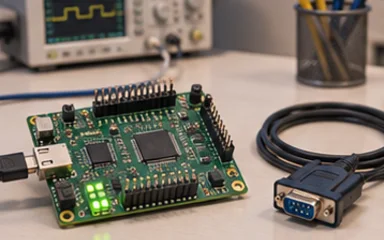
Compare CAN, CAN FD, FlexRay and automotive Ethernet by the kinds of vehicle traffic they carry.
See the detailed course outlineSee how SOME/IP supports service-oriented communication and how UDS and DoIP fit into diagnostic workflows.
See the detailed course outlineTrace how gateways route data between vehicle networks and examine the role of secure communication in firmware updates.
See the detailed course outlineReview electric vehicle subsystems and the communication needs of battery management, charging and motor control. Compare CAN, CAN FD and FlexRay through frame structure, arbitration, timing and error handling. The outlined demonstrations use simulated battery management and motor control communication. Participants relate protocol characteristics to vehicle traffic requirements rather than treating the networks as interchangeable approaches to carrying the same information.
Explore automotive Ethernet standards, physical layer considerations and traffic prioritisation before introducing service oriented communication with SOME/IP. Review discovery, invocation and message structure in electric vehicle applications, including battery and charging examples. Simulated demonstrations connect Ethernet communication to service exchanges and secure data transfer. The day also considers authentication, encryption and integrity in the context of communication between vehicle software components.
Examine Unified Diagnostic Services and Diagnostics over IP, using battery health and motor diagnostic examples from the outline. Review diagnostic services, transport mechanisms and the relationship between CAN based and Ethernet based diagnostics. Simulated activities combine diagnostic protocols with service communication and explore security measures for diagnostic messages. The focus is on understanding how diagnostic data moves through vehicle systems and how access is protected.
Review communication security across vehicle networks, including key management, authentication and the standards named in the outline. Explore TLS, IPsec and secure Ethernet approaches before examining firmware over the air updates. Simulated examples connect protected service communication with firmware transfer using DoIP. Case discussions consider integrity, authenticity and operational constraints when updating battery or other vehicle subsystems through connected communication pathways.
Explore the role of gateways in connecting CAN, CAN FD, FlexRay and Ethernet networks. Examine routing, address translation and security considerations, then consider a simulated gateway between battery management and motor control systems. Review emerging communication directions such as V2X, cellular connectivity and wireless charging. The closing discussion relates these developments to the architecture and integration decisions encountered across the earlier protocol sessions.
Need the detailed syllabus? Request the course outline.
Check prerequisites and confirm the course fit with Timmins for your role, experience and selected delivery.
Check the course outline for the software, development environment and any target hardware. Confirm installation steps, versions, equipment access and lab arrangements before joining.
Ask which preparation materials, follow-up resources or trainer support are included in your selected delivery.
Confirm the certificate, completion requirements and any assessed activities for your selected batch. A practical project does not by itself establish an assessed skills award.
Understand certificates and assessments →Confirm dates, venue, fees, available seats and delivery arrangements with Timmins before booking.
Ask Timmins about upcoming dates for this course.
View the public training calendar →Ask about another date or team delivery. Share your preferred timeframe, city or delivery mode and participant numbers. Timmins will discuss the options; dates, trainer availability, delivery and fees must be confirmed separately. Sending an enquiry does not reserve a place or confirm a class.
Your selected course is included in the draft. Review it and press Send in your messaging app.
EV software, network, diagnostics and validation engineers.
Foundation in embedded systems, networking and automotive diagnostics; working knowledge of communication protocols and cybersecurity concepts.
Check the outline and confirm the software environment, hardware, equipment access and setup requirements for your selected delivery. Do not assume all courses use the same board or lab environment.
The course topics describe the technical scope. Ask Timmins to confirm the labs, demonstrations and any assessed activities for your selected programme. Completion and assessed credentials have different requirements.
Discuss an in-house session with Timmins. Share the team’s roles, systems and intended outcomes so the scope, prerequisites, delivery and any adaptations can be agreed.