Clean C++ code and structural clarity
Review how naming, function design and control flow influence maintenance in a C++ codebase.
Explore the course learning plan Training & Capability DevelopmentLearn. Practise. Apply.⌕
Apply clean code principles in modern C++ environments.
Clean Coding in Modern C++ is an advanced, hands-on program focused on writing expressive, maintainable, and robust C++ code using modern language features and disciplined design practices.
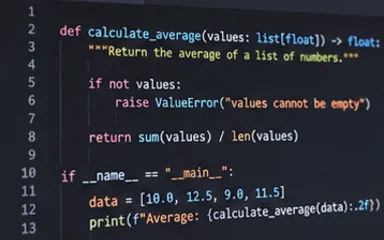
Review how naming, function design and control flow influence maintenance in a C++ codebase.
Explore the course learning planDesign classes around clear invariants and examine how construction, const-correctness and encapsulation support them.
Explore the course learning planUse modern C++ features such as structured bindings and range-based loops where they make a program easier to read.
Explore the course learning planReview how naming, function design and control flow influence maintenance in a C++ codebase. Work through examples that separate responsibilities, reduce nesting and make side effects more visible. The aim is to see when structural changes clarify the purpose of existing code without changing its intended behaviour. Trace how the language construct affects execution and data handling, relating the example to code that another developer can read, reason about and maintain.
Design classes around clear invariants and examine how construction, const-correctness and encapsulation support them. Compare resource and ownership approaches, including RAII, smart pointers and move semantics. Review how these choices affect the behaviour of a program when an operation fails or a resource changes hands. Connect the language features to the problem the code is intended to solve, tracing how inputs, program structure and execution produce the resulting behaviour.
Use modern C++ features such as structured bindings and range-based loops where they make a program easier to read. Apply the earlier principles to a legacy module and consider how to make ownership and lifetimes clearer. Discuss how shared coding practices help teams maintain those improvements. Trace how the language construct affects execution and data handling, relating the example to code that another developer can read, reason about and maintain.
Need the detailed syllabus? Request the course outline.
Check the course fit for your role and experience. Confirm the prerequisites, delivery scope and preparation before booking.
Check the full outline for this course’s tools and technologies. Confirm software versions, licences, accounts, equipment, access and installation requirements before joining.
Ask which preparation materials, follow-up resources or trainer support are included in your selected delivery.
Confirm the certificate, completion requirements and any assessed activities for your selected batch. A practical project does not by itself establish an assessed skills award.
Understand certificates and assessments →Confirm dates, venue, fees, available seats and delivery arrangements with Timmins before booking.
Ask Timmins about upcoming dates for this course.
View the public training calendar →Ask about another date or team delivery. Share your preferred timeframe, city or delivery mode and participant numbers. Timmins will discuss the options; dates, trainer availability, delivery and fees must be confirmed separately. Sending an enquiry does not reserve a place or confirm a class.
Your selected course is included in the draft. Review it and press Send in your messaging app.
C++ Software Developers, Embedded C++ Engineers, and System / Platform Engineers.
Strong working knowledge of C++ (C++11 or later). Understanding of OOP concepts (classes, inheritance, encapsulation). Familiarity with pointers and memory management.
Check the full outline for this course’s tools and technologies. Confirm software versions, licences, accounts, equipment, access and installation requirements before joining.
The learning plan describes the course topics and activities in the published summary. Ask Timmins to confirm the exercises, trainer feedback and any assessed activities for your selected delivery. Completion and assessed credentials have different requirements.
AI-assisted activities are not listed in this course summary. Ask Timmins to confirm the scope of your selected delivery rather than assuming AI tools are included.
Discuss an in-house programme with Timmins. Share the team’s roles, starting knowledge and workplace challenges. Agree any adaptations, assessment and follow-up support in the proposal.