5G evolution and end-to-end architecture
Compare earlier mobile network generations with the service requirements that shaped 5G.
Explore the course learning plan Training & Capability DevelopmentLearn. Practise. Apply.⌕
Understand the evolution, architecture, and key drivers behind 5G technology.
Participants will explore the fundamental pillars of 5G, including end-to-end network slicing, service-based architecture, Software-Defined Networking (SDN), and Network Functions Virtualisation (NFV).
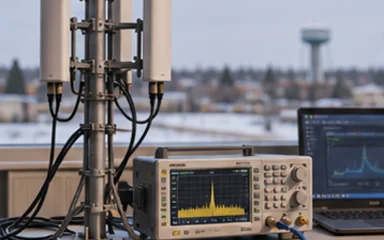
Compare earlier mobile network generations with the service requirements that shaped 5G.
Explore the course learning planExamine how network functions are virtualised and how container platforms fit into the 5G core and access network.
Explore the course learning planExplore why Open RAN separates radio network functions and how the O-RAN architecture connects them.
Explore the course learning planCompare earlier mobile network generations with the service requirements that shaped 5G. Walk through standalone and non-standalone deployments and see where the radio, core and service-based interfaces fit. The section gives participants a way to interpret a 5G architecture and understand the trade-offs behind a deployment choice. Connect the foundational ideas to the examples in the section, distinguishing the responsibility of each component before considering how they work together in a system.
Examine how network functions are virtualised and how container platforms fit into the 5G core and access network. Follow the lifecycle of a network slice, from identifying its requirements to selecting and operating it. Compare how separate logical networks can serve applications with different needs on shared infrastructure. Follow the request or message between components, distinguishing the information exchanged, the responsibilities at each boundary and the result expected by the caller.
Explore why Open RAN separates radio network functions and how the O-RAN architecture connects them. Review logical functions, key interfaces and deployment models. The discussion connects those components to what an operator or vendor needs to plan for when integrating an open radio access network. Follow the relationship between configuration and execution, identifying which component runs the workload and which dependencies must be available for it to operate.
Need the detailed syllabus? Request the course outline.
Check the course fit for your role and experience. Confirm the prerequisites, delivery scope and preparation before booking.
Check the full outline for this course’s tools and technologies. Confirm software versions, licences, accounts, equipment, access and installation requirements before joining.
Ask which preparation materials, follow-up resources or trainer support are included in your selected delivery.
Confirm the certificate, completion requirements and any assessed activities for your selected batch. A practical project does not by itself establish an assessed skills award.
Understand certificates and assessments →Confirm dates, venue, fees, available seats and delivery arrangements with Timmins before booking.
Ask Timmins about upcoming dates for this course.
View the public training calendar →Ask about another date or team delivery. Share your preferred timeframe, city or delivery mode and participant numbers. Timmins will discuss the options; dates, trainer availability, delivery and fees must be confirmed separately. Sending an enquiry does not reserve a place or confirm a class.
Your selected course is included in the draft. Review it and press Send in your messaging app.
Telecom Engineers, Solution Architects, and Security Experts.
Basic understanding of telecommunications and familiarity with 3G and 4G technologies.
Check the full outline for this course’s tools and technologies. Confirm software versions, licences, accounts, equipment, access and installation requirements before joining.
The learning plan describes the course topics and activities in the published summary. Ask Timmins to confirm the exercises, trainer feedback and any assessed activities for your selected delivery. Completion and assessed credentials have different requirements.
AI-assisted activities are not listed in this course summary. Ask Timmins to confirm the scope of your selected delivery rather than assuming AI tools are included.
Discuss an in-house programme with Timmins. Share the team’s roles, starting knowledge and workplace challenges. Agree any adaptations, assessment and follow-up support in the proposal.